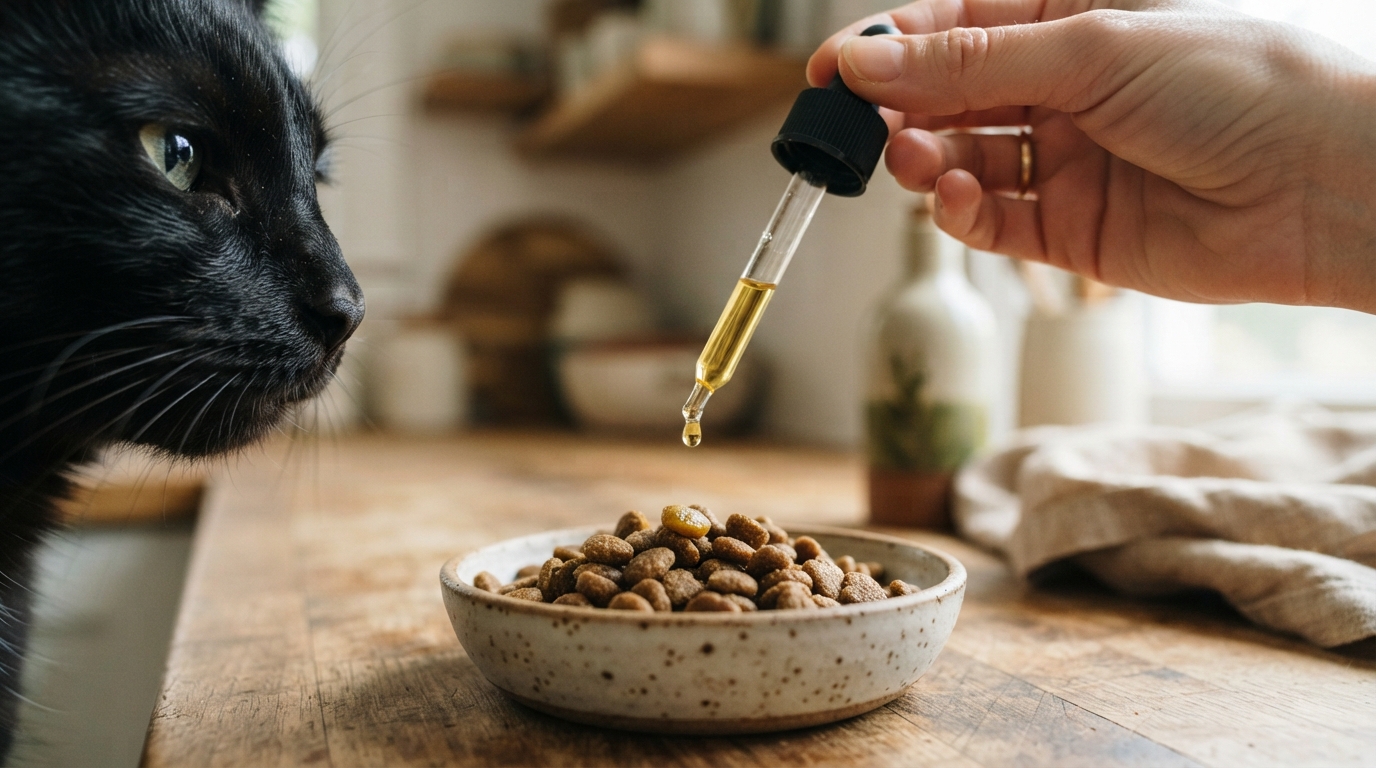
Choosing a supplement for a cat requires more attention than comparing bottle sizes or reading a few customer reviews. Cats have different metabolic characteristics from humans and dogs, and the scientific evidence surrounding cannabidiol remains limited. For owners researching Holistapet CBD Oil for Cats, the most useful starting point is a clear understanding of product concentration, ingredients, testing, storage, and veterinary considerations.
Start With the Product Label
A product label should provide enough information to identify exactly what is inside the container. Terms such as hemp extract, hemp oil, and cannabinoid blend can describe very different formulations.
CBD concentration is one of the first details to check. Total CBD in a bottle and CBD per milliliter are different measurements. For example, a 30-milliliter bottle containing 300 milligrams of CBD provides a different concentration from a 30-milliliter bottle containing 600 milligrams.
This distinction becomes important when comparing products because two bottles can look nearly identical while providing different amounts of CBD in each milliliter.
Information Worth Comparing
The following table provides a practical way to organize the main product details.
| Product detail | What to check | Why it matters |
|---|---|---|
| CBD concentration | Milligrams per milliliter | Shows how concentrated the oil is |
| Total CBD | Total milligrams in the bottle | Helps compare products of different sizes |
| THC | Clearly stated concentration | THC can cause adverse effects in cats |
| Ingredients | Complete ingredient list | Identifies carrier oils and additives |
| Batch number | Clearly printed identification | Helps match the product with testing |
| Laboratory report | Batch-specific results | Provides information about composition |
| Carrier oil | Exact oil identified | Some formulations may be unsuitable for individual cats |
| Storage instructions | Temperature and light guidance | Helps maintain product quality |
A label that leaves several of these details unclear may make the product difficult to assess.
Look Beyond the Front Label
Marketing language often emphasizes the main ingredient while giving less attention to the rest of the formulation. The complete ingredient list can reveal information that is not obvious from the product name.
Some oils contain only a few ingredients. Others may include flavoring compounds, botanical extracts, or essential oils.
Cats have specific sensitivities to certain plant compounds. Several essential oils, for example, can be toxic to cats. A product designed to appeal to humans may therefore contain ingredients that are inappropriate for feline use.
Carrier Oils Matter Too
CBD extracts are commonly diluted in a carrier oil. The carrier allows the cannabinoid extract to be distributed throughout the product and can affect texture and administration.
Common carrier oils may include coconut-derived oils, hemp seed oil, olive oil, or other vegetable oils. The presence of a particular carrier does not automatically establish that a product is safe for every cat.
A cat with an existing digestive disorder may require different considerations from a healthy cat. Veterinary advice can help determine whether the complete formulation is appropriate.
Check for Independent Testing
Independent laboratory testing can provide useful information about the contents of a cannabinoid product. A certificate of analysis, often shortened to COA, may show cannabinoid concentrations and results from contaminant screening.
A useful report should identify the tested sample or batch. If a company provides only a general statement that its products are tested, there may be no easy way to determine whether the report applies to the bottle being considered.
What Laboratory Reports May Show
Depending on the testing laboratory and method, a report may include:
- CBD concentration
- THC concentration
- Other cannabinoids
- Heavy metal screening
- Pesticide screening
- Microbial testing
- Residual solvent testing
Laboratory testing should be interpreted correctly. A clean test result can provide information about product composition and contaminants, but it does not demonstrate that CBD treats a specific feline condition.
That distinction prevents laboratory testing from being mistaken for clinical approval.
Understand the Difference Between CBD and THC
CBD and THC are both cannabinoids, but they have different effects. THC is psychoactive and can cause intoxication in animals.
Cats exposed to THC may develop signs such as unusual sedation, impaired coordination, dilated pupils, urinary accidents, vomiting, tremors, or changes in behavior.
For this reason, THC content deserves separate attention when evaluating a hemp-derived product. The word “hemp” alone does not provide enough information about the cannabinoid profile of the finished product.
Accidental Exposure Can Happen
Cats are curious and may investigate bottles, bags, or containers left on counters. A bottle with a dropper can also leak if it is not closed properly.
CBD products should be stored securely and kept away from food, treats, and areas that the cat regularly explores.
If accidental ingestion occurs, the original container should be kept available. The label can provide useful information about ingredients and cannabinoid concentration when veterinary advice is needed.
Consider the Evidence Behind Health Claims
CBD products may be promoted for anxiety, joint discomfort, appetite, inflammation, seizures, or general wellness. Evidence for these claims varies, and feline research is still relatively limited.
Research in dogs has examined some potential applications, including osteoarthritis and seizure-related conditions. Those studies are useful to veterinary researchers, but findings in dogs cannot automatically establish the same effect in cats.
Feline studies have examined pharmacokinetics and safety, and some research has reported gastrointestinal effects in cats receiving CBD. More controlled research is needed to determine whether CBD provides reliable clinical benefits for specific feline conditions.
A Simple Evidence Check
When reading a product claim, ask:
- Was the study conducted in cats?
- Was the study controlled?
- Was the condition actually investigated?
- Was the product formulation similar to the one being considered?
- Was the research published in a scientific or veterinary journal?
The answers can reveal whether a claim is supported by direct evidence or based mainly on broader cannabinoid research.
Veterinary Guidance Before Use
A veterinarian can help determine whether a cat’s symptoms require examination before any supplement is considered. This matters because behavioral changes can sometimes indicate an underlying medical issue.
Reduced appetite, hiding, decreased grooming, reluctance to jump, or changes in litter box behavior may have several possible causes. Treating the visible symptom without investigating its source can delay appropriate care.
Medication use is another factor. CBD may affect enzymes involved in the metabolism of certain medicines. A veterinarian can review the cat’s medication list and consider possible interactions.
Keep Relevant Information Available
Before discussing a CBD product with a veterinarian, gather:
- Product name
- Complete ingredient list
- CBD concentration
- THC concentration
- Batch number
- Laboratory report, if available
- Current medications
- Other supplements
- Reason for considering CBD
This information makes the conversation more specific and reduces guesswork.
Watch the Cat Carefully
If a veterinarian determines that a CBD product can be considered, observation becomes important. Cats may show changes through small shifts in behavior rather than obvious complaints.
A simple record can include the time the product was given, appetite, water intake, bowel movements, energy, coordination, and general behavior.
Potential unwanted signs may include vomiting, diarrhea, excessive sleepiness, poor coordination, tremors, excessive drooling, or unusual behavior.
A persistent or severe reaction warrants veterinary attention.
Why Generic Dosage Charts Can Be Misleading
Online CBD dosage recommendations often reduce the calculation to body weight. That approach can leave out several important factors.
The concentration of the specific product, the cat’s health, medications, age, and individual sensitivity can all affect how a cannabinoid product should be assessed.
A 5-kilogram cat could receive very different amounts of CBD depending on the concentration of the oil. This is why a milligram-per-kilogram number copied from an unrelated product may not translate accurately to another formulation.
Veterinary guidance is more appropriate than applying a generalized chart.
Market Interest and What It Means
Commercial interest in pet CBD products has increased, and market research companies have published forecasts describing continued growth in the broader pet cannabinoid sector. Estimates differ because market reports use different definitions and geographic boundaries.
These figures can show that consumers are purchasing or researching cannabinoid products. They cannot establish that CBD is an effective treatment for cats.
Scientific evidence and market demand answer different questions. A growing market may encourage more research, but clinical conclusions still depend on controlled studies.
A Practical Product-Selection Checklist
A careful review can be completed before purchasing a product.
- Confirm the amount of CBD per milliliter.
- Review the complete ingredient list.
- Check whether THC is identified.
- Look for batch-specific laboratory testing.
- Examine the carrier oil.
- Avoid formulations containing questionable additives.
- Check the product’s storage instructions.
- Keep the product away from children and pets when not in use.
- Discuss the product with a veterinarian when the cat has medical conditions or takes medication.
A product that provides clear information is easier to evaluate than one that depends heavily on broad marketing statements.
Final Thoughts
Selecting a CBD product for a cat requires attention to concentration, ingredients, THC content, laboratory testing, and individual health factors. Current feline research remains limited, so careful evaluation and veterinary guidance are sensible steps before introducing any cannabinoid supplement.
